
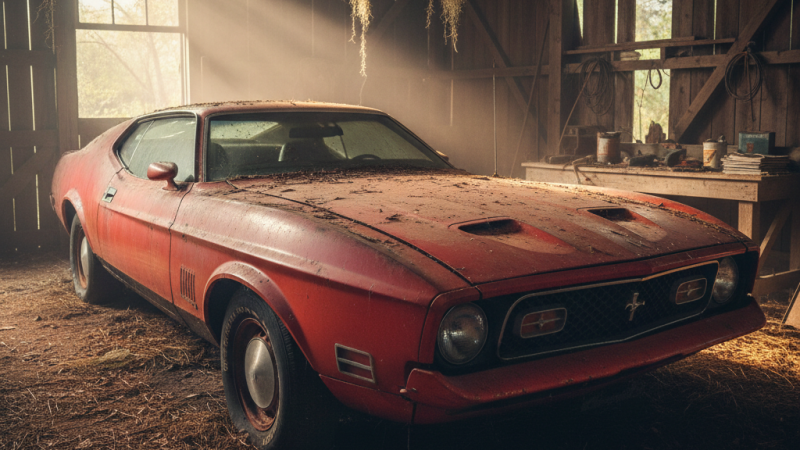
For decades, the peak of the automotive hobby was defined by the quest for perfection. Collectors spent years and fortunes chasing “Concours d’Elegance” standards, ensuring every bolt was clocked to the factory angle and every layer of paint was buffed to a mirror shine. However, as we move through 2026, a seismic shift has occurred in the collector community. The gleaming “trailer queen” is no longer the undisputed king of the show field. Instead, the most captivated crowds are gathering around vehicles that haven’t seen a fresh coat of paint since the Truman administration. This is the era of the “Survivor,” where dust, faded lacquer, and the gentle scars of time—collectively known as patina—are becoming more valuable than the most expensive restorations.
The allure of a barn find lies in its unrepeatable history. While a skilled shop can replicate factory-correct teal or crimson paint, they can never replicate the specific way that paint thinned and cracked over fifty years in a humidity-rich Lowcountry garage. At elite events like the Pebble Beach Concours d’Elegance, the “Preservation Class” has become the hottest ticket on the 18th fairway. These vehicles are essentially time capsules; they offer a physical record of assembly line techniques, materials, and even the mistakes made by the original factory workers. For the modern collector, an original-paint survivor is an artifact rather than a product. This scarcity is reflected in the market, where a scruffy but honest survivor often commands a higher price than a perfectly restored twin simply because “it is only original once.”
This shift has sparked an intense ethical debate among preservationists regarding where “character” ends and “neglect” begins. In a coastal environment like Bluffton, South Carolina, the salt-heavy air turns patina into destructive corrosion faster than in the desert. The dilemma for a 2026 owner is whether to arrest the decay through clear-coating and chemical stabilization or to let the car continue its slow return to the earth. Most experts now agree that preserving the mechanical integrity while leaving the cosmetics untouched is the most ethical path. Cleaning away decades of mouse nests and grime is encouraged, but scrubbing away the “originality” is considered an automotive sin. In the eyes of the modern collector, a worn seat bolster tells a story of Sunday drives past May River, while a brand-new leather interior tells no story at all.