
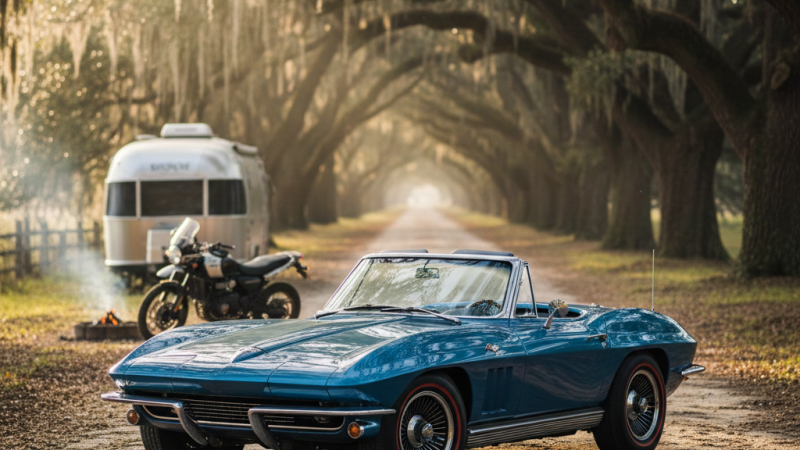
In 2026, the automotive landscape is witnessing a profound cultural and financial pivot as the “final chapter” of the analog era officially transitions from used-car status to blue-chip investment. This movement is fueled by a growing realization that the tactile connection between driver and machine—once a standard industry feature—is becoming a luxury of the past. As manufacturers shift toward standardized electric platforms, steer-by-wire systems, and massive touch-screen interfaces, a dedicated segment of collectors is aggressively securing vehicles that still offer manual transmissions, physical keys, and high-revving internal combustion engines. This “Analog Revolution” is particularly visible in the Lowcountry, where the salt air of Bluffton and the winding, moss-draped roads of Hilton Head provide the perfect backdrop for Sunday morning “Cars and Coffee” gatherings at the USCB campus.
The 2026 “Bull Market” lists reflect this shift with startling clarity, highlighting rising stars that were once considered mere “used sports cars.” The 2006–2013 Chevrolet Corvette Z06 (C6) has emerged as a primary target for savvy collectors, prized for its 7.0-liter LS7 V8—an engine that represents the pinnacle of naturally aspirated American muscle before the era of supercharging and digital interference took hold. Similarly, the E60 BMW M5 is seeing its value skyrocket among enthusiasts under 40, who are drawn to its unique, Formula 1-derived V10 engine that offers a visceral, high-decibel experience modern hybrids simply cannot replicate. Even the humble Mazda Miata (NB generation) is experiencing a surge in desirability, as it provides one of the last pure, lightweight driving experiences accessible to those who value mechanical simplicity over raw horsepower.
For many in the South Carolina car community, these vehicles represent more than just financial assets; they are the last relics of a time when driving required a specific set of skills. While modern supercars can deliver faster lap times through complex computer algorithms, they often lack the “soul” found in a manual-shift gearbox or a hydraulic steering rack. As the global market recalibrates toward software-defined vehicles, the rarity of these analog components is driving prices upward, making them the new “Gold Standard” for collectors. Whether it is a pristine Japanese import becoming legal under the 25-Year Rule or a local Lowcountry survivor found in a garage near Palmetto Bluff, the message for 2026 is clear: the most valuable technology in the garage might just be the one that doesn’t require a software update.