
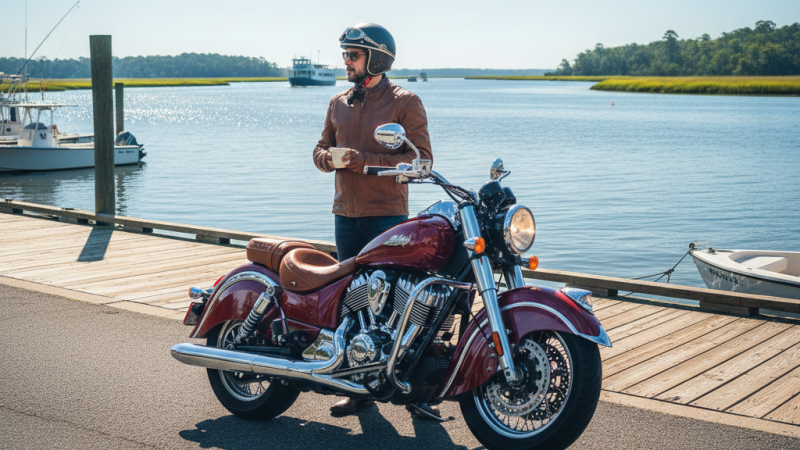
The modern motorcycle market in 2026 is currently being reshaped by a paradox: the more digital our lives become, the more riders crave a visceral, mechanical escape. This has led to the explosive rise of the “Neo-Retro” segment, a category of bikes that successfully marries the timeless silhouettes of the 1970s and 1940s with the sophisticated engineering required for the twenty-first century. This movement is not merely about nostalgia but about “Heritage Engineering”—a design philosophy where the primary goal is to hide modern complexity behind a mask of vintage simplicity. In the Lowcountry, this trend is perfectly embodied by the “Gentleman Rider” culture, where the aesthetic of the machine is treated with the same reverence as its performance.
Central to this movement is the landmark release of the 2026 Indian Chief Vintage, a motorcycle that serves as the centerpiece for the brand’s 125th-anniversary celebration. While most modern cruisers are leaning into aggressive, blacked-out futurism, the Chief Vintage unapologetically looks back to the post-war “Golden Age.” It features the iconic flowing valanced fenders and the signature illuminated headdress ornament that made Indian unmistakable in the 1940s. Beneath this historic skin, however, lies the Thunderstroke 116 V-twin, an air-cooled powerhouse delivering 120 ft-lbs of torque. By using non-machined black cylinders and silver-painted heads, Indian has managed to mimic the raw aluminum look of the original 1940s engines while providing 2026-standard reliability, including rear-cylinder deactivation for those hot South Carolina summers and three distinct ride modes to tailor the throttle response.
The allure of these machines extends beyond cruisers and into the world of café racer aesthetics, where the focus shifts to minimalist, “ton-up” styling. The modern café racer of 2026, such as the Triumph Thruxton 400 or the Kawasaki Z900RS, prioritizes the tactile experience over digital convenience. Enthusiasts are increasingly rejecting the trend of massive iPad-like dashboard screens in favor of premium leather finishes, brushed metal accents, and analog-style needle gauges that provide a rhythmic, physical connection to the engine’s RPMs. This culture of the “Gentleman Rider” is about more than just speed; it is about the ritual of the ride—choosing a bike that looks as at home parked in front of a Bluffton bistro as it does carving the backroads toward Beaufort.
What makes this era of motorcycles truly special is the seamless integration of invisible safety. A rider on a neo-retro machine can enjoy the classic look of wire-spoke wheels and a solo spring seat while benefiting from cornering ABS, traction control, and LED lighting hidden inside a traditional round headlamp housing. This fusion ensures that the “final chapter” of internal combustion remains accessible and safe without sacrificing the “soul” of the machine. In an age of autonomous cars and software-defined transport, the heritage motorcycle stands as a defiant tribute to the era of the open road, proving that sometimes the best way to move forward is to take a very long look back.