
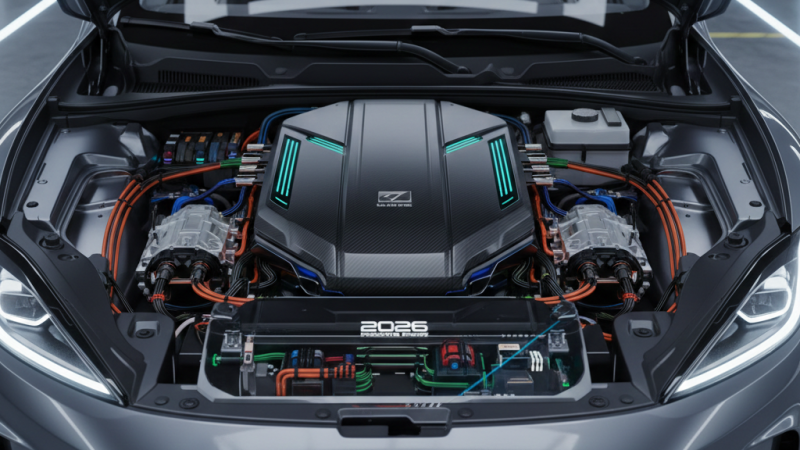
The most significant shift for the average driver in 2026 is the mainstream dominance of Lithium Iron Phosphate (LFP) and the emergence of Sodium-ion batteries. Unlike the high-strung nickel-cobalt batteries of the early 2020s, these new chemistries prioritize longevity and cost over raw energy density.
- The 300,000-Mile Life: LFP batteries in 2026-model cars like the Tesla Model 3 and Ford Mustang Mach-E are now engineered to last for thousands of charge cycles. For the owner, this means you can charge to 100% every single night without the “battery anxiety” of degrading your car’s long-term value.
- Sodium-ion has Arrived: 2026 marks the first year of large-scale deployment for sodium-ion batteries in budget-friendly city cars. By swapping rare lithium for abundant sea salt (sodium), manufacturers have finally broken the $100/kWh price barrier, making entry-level EVs as cheap to buy as their gas-powered counterparts.
Solid-State: From Lab to Lane
While widely considered the “holy grail,” Solid-State Batteries (SSBs) have finally made their production debut in 2026. These batteries replace the liquid electrolyte with a solid material, making them nearly immune to fire and capable of holding 50% more energy in the same footprint.
- The 10-Minute Charge: Lead by prototypes from Toyota and specialized “Donut” batteries unveiled at CES 2026, these units can charge from 10% to 80% in about the time it takes to grab a cup of coffee.
- Cold-Weather Kings: One of the biggest breakthroughs this year is their resilience to extreme temperatures. 2026 SSBs maintain nearly their full range even in -30°C weather, solving the “winter range drop” that plagued earlier electric models.
Trucks and Towing: The 200kWh Reality
For the American truck market, 2026 has brought the era of the “Mega-Pack.” Trucks like the 2026 Chevrolet Silverado EV Max Range are now shipping with massive 205kWh battery systems.
- Towing with Legs: While towing still slashes range by roughly 40-50% due to aerodynamic drag, these massive packs provide enough of a buffer that a 2026 electric truck can finally pull a 7,000-lb trailer for over 200 miles on a single charge—a critical threshold for weekend adventurers.
- The Weight Trade-off: The challenge remains the weight. These batteries are so heavy that manufacturers are turning to Structural Battery Packs, where the battery itself acts as the car’s frame, saving enough weight to keep these titans from becoming too heavy for standard roads.
The Circular Economy
Finally, 2026 is the year the industry got serious about Battery Passports and recycling. Every new battery produced this year comes with a digital twin that tracks its origin, chemistry, and health. When a 2026 battery eventually reaches the end of its life, new “direct-to-battery” recycling techniques can now recover up to 98% of the critical minerals, ensuring that the lithium and copper we mine today will stay in the supply chain for decades to come.
Local Insight: For those in coastal areas like Bluffton, these 2026 batteries are increasingly housed in IP69K-rated enclosures, offering the highest level of protection against salt-water intrusion and humidity-related corrosion.